This blog breaks down corporate offsite planning checklist into three essential stages: Before, During and After, so your team knows what to plan, what to watch for and what not to overlook at every step.
A high-impact corporate offsite takes more than a great venue and a packed itinerary. It requires a complete corporate event planning checklist that covers every stage of the experience, what needs to be done before the offsite, what needs to happen during it, and what should follow once the team heads back from the company offsite.
From defining the purpose and setting a realistic corporate offsite budget, setting the right budget and choosing the right venue to managing on-ground execution and capturing post-offsite feedback, every stage comes with its own set of decisions, details and potential challenges.
We’ll also unpack common planning mistakes, practical tips, execution hacks and often-overlooked details, drawing from 12+ years of experience planning and executing corporate events and offsites for organizations across different industries.
And if managing all of this feels like a project, that’s where an experienced corporate event planner can take the load off your team. From strategy and corporate event planning to venue, logistics, experiences and on-ground execution, Prolite can manage your offsite end to end.
Before the Offsite: Get the Foundation Right
1. Before You Pick the Venue, Decide What Success Looks Like for Your Organization
This is the base you need to start with before you shortlist a venue or build an itinerary. Whether the goal is stronger collaboration, leadership alignment, strategic planning or employee rejuvenation, define the intended outcome first. It becomes the filter for every decision that follows, from the destination and format to the experiences you build into the offsite.
2. 300 People Isn’t a Number. It’s 300 Different Needs.
Consider the seniority mix, age groups, dietary preferences, accessibility requirements, mobility, interests and individual needs before designing the experience. A leadership retreat, a 50-person team offsite and a 300-person company gathering will demand completely different formats, logistics and engagement strategies. The better you understand your audience, the more relevant the offsite becomes.
3. Budget for the Experience, Not Just the Venue
A corporate offsite budget should account for far more than accommodation and travel. Factor in venue costs, food and beverages, transportation, activities, production, entertainment, branding and on-ground requirements before committing to a number. Most importantly, keep a contingency buffer for last-minute changes, unexpected requirements, or price variations. A well-planned budget gives you room to deliver the experience you promised without compromising when reality inevitably changes the plan.
4. The Destination Has a Job to Do – make sure it delivers
Look beyond popularity and aesthetics to assess travel time, connectivity, seasonality, weather, accessibility, team profile and the experiences the destination can realistically support. A two-hour transfer, limited event infrastructure or unpredictable weather can quickly change the experience once you have a large team on the ground. Choose the destination based on what you want your team to experience, not simply where everyone wants to go.
5. The Brochure Won’t Tell You Everything about the venue you plan on picking
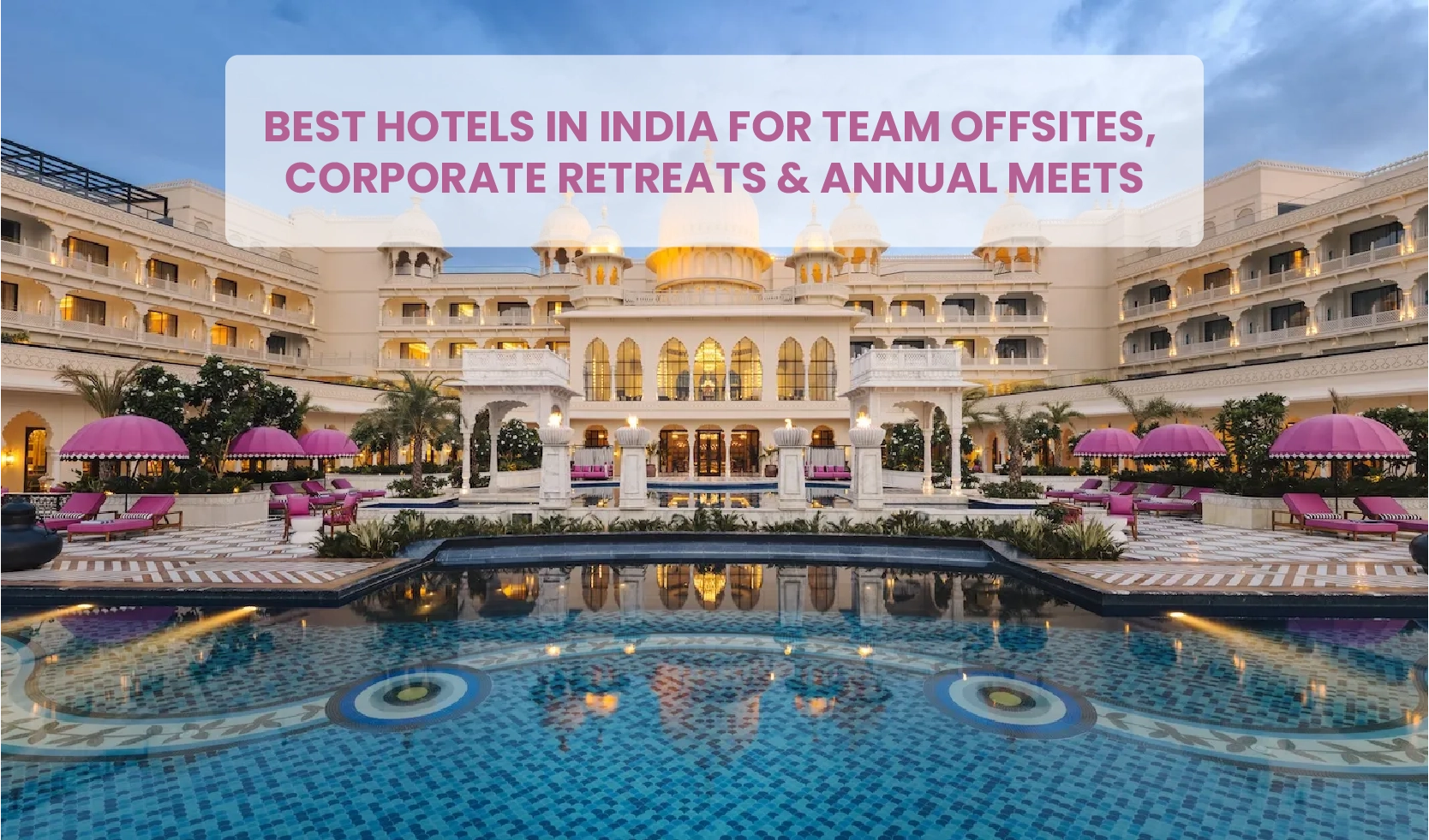
A corporate offsite venue can look perfect online and still be operationally wrong for your offsite. Look beyond the aesthetics and evaluate the meeting spaces, room inventory, event areas, backup venues, AV infrastructure, power supply, Wi-Fi, parking, food service and on-ground capabilities. Beautiful photographs and impressive property decks don't tell you whether an office offsite venue will actually work for your organization .
This is exactly why we created Prolite On Location, our series where we visit India’s fines hotels, resorts and hidden gems through the lens of an experienced corporate event planner, looking beyond the brochure to understand how a property actually works for an offsite and provide you with all the details you need for choosing a venue for your next company offsite.
From event spaces and room configurations to team building opportunities, logistics, dining, operational readiness of the venue and the details that can make or break execution, we look at what planners need to know before making a booking. Once you’ve shortlisted a venue through Prolite On Location, we can also offer dedicated corporate packages around your requirements.
6. Check the rooming plan early
Prepare the rooming list and understand single, twin, and triple occupancy requirements before confirming the venue. Last-minute room shortages or incorrect allocations can create unnecessary friction at check-in.
7.Build the agenda around energy, not just time
Avoid packing every hour with meetings and activities. Alternate between high-energy sessions, business discussions, meals, downtime and informal interaction, so participants don't feel like they're attending a conference in a resort.
8. Every Activity Should Earn Its Place
Every corporate team offsite idea and activity should have a reason for being there. A team-building activity should encourage collaboration; a leadership experience should create space for reflection; a celebration should actually feel celebratory.
9. Give Your Transitions Time to Breathe
Account for the time people need to walk, change, freshen up, check in, board transport or move between venues. Always factor in movement time; getting 150 people from breakfast to a session isn't as quick as it looks on the schedule.
10. Build a detailed logistics plan
Map everything from airport transfers and local transportation to check-in, luggage movement, meal timings, and activity transfers. Small logistical gaps become very visible when you're managing a large group.
11. Have a weather and backup plan
Outdoor dinners, adventure activities, and team challenges are vulnerable to weather. Identify indoor alternatives and backup time slots before the event rather than improvising when it starts raining.
12. Never Underestimate the Food
Go beyond simply selecting a menu. Account for dietary restrictions, allergies, regional preferences, meal timings, working lunches, late arrivals and beverage requirements. Food is one of the first things participants notice when it goes wrong.
13. Confirm technical requirements
For presentations and corporate sessions, verify screens, microphones, speakers, clickers, lighting, internet connectivity, power points, and backup equipment. Never assume the venue's standard setup will match your programme.
14. Align every stakeholder
The HR team, leadership, venue, production team, transport partners and vendors should work from one consolidated plan. Miscommunication between teams is one of the easiest ways to create avoidable problems.
15. Create an emergency escalation matrix
Know exactly who handles medical emergencies, transport delays, vendor issues, weather disruptions, and participant concerns. People should know whom to call before something goes wrong.
16. Communicate with employees before departure
Start building excitement from the moment the date is announced. Send a Save the Date early, followed by clear travel information, a simple itinerary, packing checklist, and everything participants need to know before they leave.
Tell them what kind of destination they're heading to, what the weather is likely to be like, whether they'll need comfortable footwear for activities, what to pack, what to wear and anything else they should prepare for. If there are surprises planned, don't reveal everything, give them enough information to feel prepared while leaving enough mystery to build anticipation.
A well-planned communication flow reduces last-minute questions, helps employees arrive prepared and turns the journey into the beginning of the offsite experience.
17. Do a final pre-event walkthrough
Before the team arrives, walk through the entire experience physically — arrival → check-in → rooms → sessions → meals → activities → evening event → departure. This is where planners often spot gaps that spreadsheets don't reveal.
During the Offsite: Protect the Experience
Once the team arrives, the planning team moves from planning mode to control-tower mode. The objective is to make everything feel effortless to the participant.
1. Get the arrival experience right
The first 30 minutes set the tone. Keep transfers, welcome registration, luggage handling and check-in organized, so participants aren't standing around wondering what happens next.
2. Keep one person accountable for the master schedule
Someone should own the overall programme and timeline. When multiple vendors are involved, having one central point of control prevents small delays from snowballing.
3. Monitor timings continuously
Don't blindly follow the itinerary. Track where the programme is running ahead or behind and adjust intelligently without making participants feel rushed.
4. Keep sessions technically ready
Test AV before every important session, not just at the beginning of the event. A five-minute microphone failure can disrupt an otherwise well-planned leadership session.
5. Watch participant energy
Look beyond attendance. If people are visibly tired, disengaged, or overstimulated, the programme needs adjustment. Engagement is something you monitor throughout the offsite, not something you assume because an activity is scheduled.
6. Keep transitions invisible
Participants shouldn't have to wonder where they need to go, when they need to leave, or what happens next. Clear signage, announcements, coordinators, and group leads can make transitions considerably smoother.
7. Keep leadership informed
Senior stakeholders should have visibility into schedule changes, delays, participation and important operational issues without having to chase the planning team for updates.
8. Maintain food and hospitality checks
Don't simply trust that meals are happening because they're on schedule. Check timing, replenishment, dietary meals, service flow, and seating capacity during the event.
9. Keep a live issue tracker
Track problems as they arise - missing items, room issues, transport delays, technical glitches, participant requests, and assign ownership immediately. Otherwise, small issues get forgotten.
10. Capture the experience
Photography and videography should not just document the stage. Capture team interactions, candid moments, activities, and the atmosphere because these become valuable post-event assets.
11. Keep the backup plan ready
Don't wait until something fails to decide what to do. Whether it's weather, a delayed transfer or a technical issue, the team should already know Plan B and who activates it.
After the Offsite: Don't Treat Check-Out as the Finish Line
1. Collect feedback while it's fresh
Send a short survey soon after the event. Ask about venue, food, activities, sessions, logistics and overall experience while the details are still fresh.
2. Measure against the original objective
Don't stop at “Did everyone enjoy it?” Ask whether the offsite actually achieved its purpose. Did teams collaborate better? Did leadership align? Did employees engage with the programme?
3. Review the numbers
Compare the planned corporate offsite budget against actual spending. Review where the budget was exceeded, where savings were possible, and which costs delivered genuine value.
4. Conduct a Proper Post-Event Debrief
Bring the planning team together while the experience is still fresh. Review what worked, what didn't, what surprised you and what should be done differently next time. Go one step deeper by reviewing whether each person delivered on their assigned responsibilities, who handled their role well, where responsibilities overlapped or fell through, which teams needed more support, and where the process can be tightened for the next offsite.
Also review vendor coordination, timeline adherence, communication gaps, last-minute issues, and how effectively the team responded when plans changed. The goal isn't to find fault; it's to turn every offsite into a better playbook for the next one.
5. Evaluate vendors and partners
Review the performance of the venue, transport partners, production teams, activity vendors, entertainers, and other suppliers. This becomes valuable intelligence for your next offsite.
6. Document the operational learnings
Create a simple post-event document containing timelines, vendor performance, budgets, issues, solutions, and participant feedback. Next year's planning team shouldn't have to start from zero.
7. Close the communication loop
Share photos, videos, highlights, or key takeaways with employees. It extends the experience beyond the event and gives participants something tangible to take back.
8. Track the impact after the event
For strategic offsites, check whether the outcomes discussed actually translated into action. Alignment exercise is only useful if the alignment survives beyond the resort.
9. Preserve the vendor and venue intelligence
Record useful details such as best event spaces, room categories, venue limitations, preferred vendors, and actual travel times. These details become extremely useful when planning the next company offsite.
10. Start the next planning cycle with what you learned
The best post-event report isn't something that gets filed away. Use it to make the next corporate offsite faster, smarter, and more relevant.
Now, let’s get into the details that can make planning smoother: common mistakes, practical tips and on-ground execution hacks.
Common Planning Mistakes
Choosing the venue before defining the objective
Underestimating travel and transition time
Overpacking the itinerary
Ignoring the backup plan
Treating communication as an afterthought.
Planning only for the event day.
Practical Tips:
Do a physical venue walkthrough before finalizing the property.
Freeze the rooming list early and keep a process for late changes.
Build buffer time into transfers, check-ins, meals, and session transitions.
Keep one master run-of-show that every stakeholder works from.
Maintain a single emergency/escalation contact sheet.
Check weather and local conditions before locking outdoor experiences.
Keep dietary, accessibility, and medical requirements documented.
Brief vendors together instead of giving different teams fragmented information.
Create a participant communication timeline - Save the Date → travel details → packing guide → final itinerary → last-minute updates.
Execution Hacks:
These can be the more “insider” part of the article:
Have one person own the master timeline. Everyone can have a role, but someone needs the complete picture.
Use a live issue tracker. Assign every problem to an owner instead of relying on WhatsApp messages and memory.
Keep a 15-minute rule. If something is running late, decide quickly whether to recover the time, shorten the activity, or move the next slot.
Prepare activity kits in advance. Don't make the team wait while materials are being assembled.
Do AV checks before every major session. Not just once in the morning.
Keep leadership movement separately where required. Senior stakeholders may have different schedules, rooms, or transport needs.
Have a participant-facing point of contact. People shouldn't need to hunt down the event team for every small question.
Document the event while executing it. Capture what happened, not just what was planned; it makes the post-event review far more useful.
Keep Plan B invisible. Participants should experience a seamless change, not watch the planning team panic when something goes wrong.
Planning the Offsite Is Only Half the Job. Getting It Right Is Real Work.
A corporate offsite brings together dozens of moving parts - strategy, destination, venue, budgets, travel, experiences, hospitality, production, people and on-ground execution. When these pieces work together, the result feels effortless to the people experiencing it. When they don't, even the most impressive venue can fall short.
At Prolite, we bring 12+ years of experience in planning and executing corporate events and offsites across destinations and formats. From understanding your objectives and recommending the right venue to designing experiences, managing logistics, coordinating partners, and taking care of execution on ground, we manage the details that make the actual difference.
Whether you're planning a focused leadership retreat, a large-scale company offsite, a team-building experience or a destination corporate event, our approach is built around your people, your objectives and the experience you want them to take back.
Planning an offsite shouldn’t become another project for your HR team. Let Prolite take care of every moving part, from the first brief to the final wrap-up.